
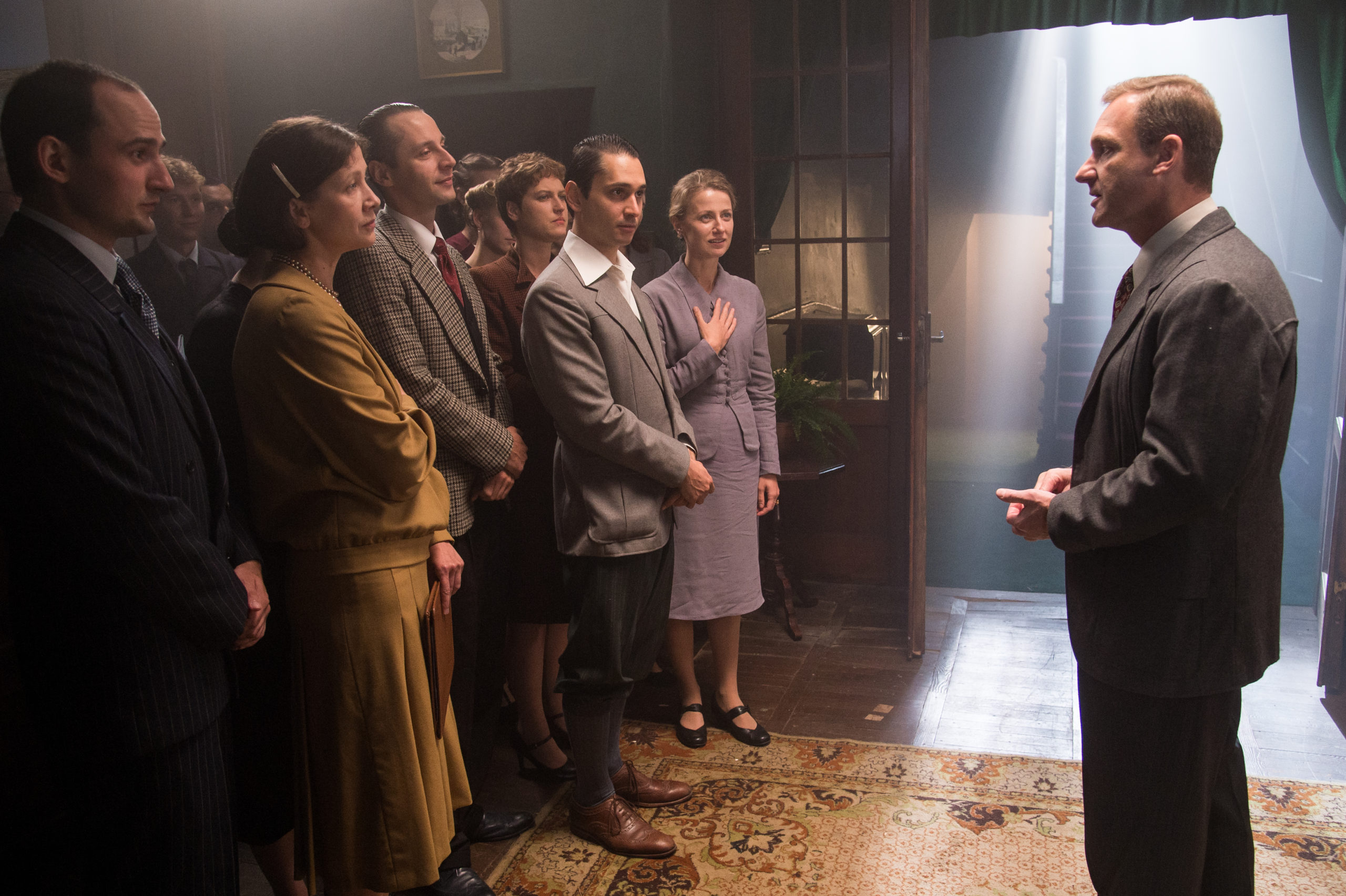
The composition of the film focuses on three stages of the defense of Warsaw in September 1939, which are reflected in the rhythm of the work of the Polish Radio.
We observe figures important for the defense of the city: President Stefan Starzyński and Col. Wacław Lipiński (head of propaganda of the Warsaw Defense Command); we also observe the work of the radio staff. Their commitment, faith, and sense of duty made Polish Radio a source of moral and spiritual strength for the fighting capital and its inhabitants. Despite the boom of bombs, artists (such as Władysław Szpilman) also came to the radio station headquarters to recite poetry, read prose, and give live concerts. During the broadcast of Rachmaninoff’s Second Piano Concerto in C minor, Op. 18, the power plant was damaged and the radio went silent. However, despite the continual shelling, the deteriorating situation, and heavy air raids, all employees remained in their positions until September 30, believing that electricity would flow again at any moment and they would be able to return to work.
When this turned out to be impossible, they said goodbye to the audience: “Hello, hello, can you hear us? This is our last message. Long live Poland!” A moment later, the Germans entered the radio building.


Watch trailer: